
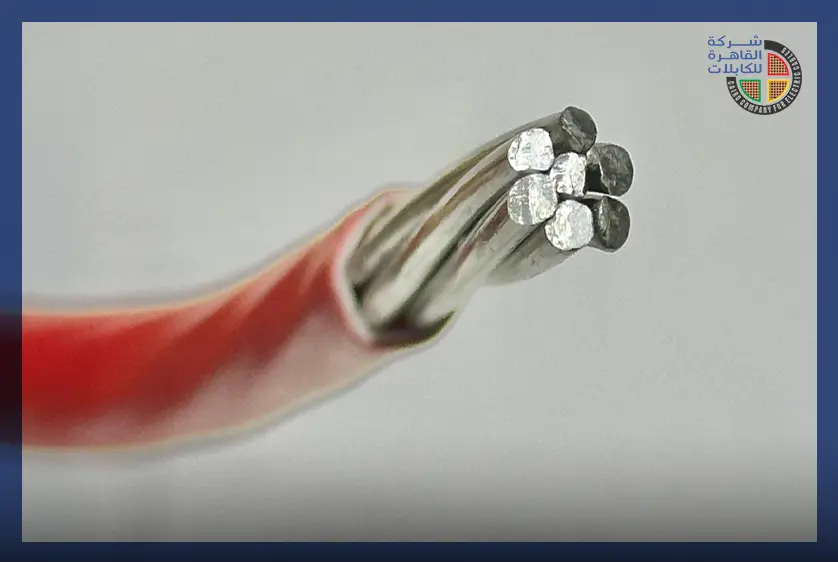
Components of a 35mm aluminum cable
Before we get to know the price of a 35mm aluminum cable, let’s get to know the components of a 35mm aluminum cable, where the 35mm aluminum cable consists of several main components, which are :
Conductor
The conductor is the main component of the cable, and is made of thin strands of pure aluminum.
The cross-sectional area of the conductor determines its ability to conduct electrical current.
Insulation
The conductor is covered with a layer of insulation to prevent any electrical contact between it and other components.
Different types of insulation are available, such as polyethylene (PE) and polyvinyl chloride (PVC).
Padding
Padding is used to fill the spaces between the conductor strands, which helps to Improve cable stability and prevent water or moisture from entering.
Outer jacket
The cable is covered with an outer jacket to protect it from external factors, such as
corrosion and mechanical damage.
Different materials are used to manufacture the outer jacket, such as polyethylene (PE)
or polystyrene chloride (PVC).
Uses of 35mm Aluminum Cable
35mm aluminum cables are used in many applications, including:
- Power transmission in residential homes: Used to transmit power from the distribution board to various electrical appliances in the home.
- Electrical distribution in commercial buildings: Used to supply power to commercial buildings.
- Industrial applications: Used in various industrial applications, such as operating machinery and equipment.
- Renewable energy networks: used to transfer energy from renewable energy plants to the electrical grid.
Aluminum cable prices
Aluminum cable prices are affected by several factors such as the price of raw aluminum, production costs, market demand, the quality of the technologies used in manufacturing, and installation and shipping costs. Prices vary based on these factors in addition to other factors such as diameter, length, and quality, as well as the type of cables. We find that the price of a 35 mm aluminum cable differs from other types of cables.
35mm Aluminum Cable Price
The price of a 35mm aluminum cable varies greatly depending on several factors, including:
- Cable Type: Armored aluminum cables are more expensive than regular aluminum cables.
- Material Quality: The quality of raw materials directly affects the price of the cable.
- Brand: Some brands have a good reputation in the cable manufacturing industry, which may lead to a higher price for their products.
- Quantity Purchased: Some companies offer special offers for large orders.
- Country of Origin: Cable prices vary depending on the country of origin.
- Demand and Supply: Fluctuations in demand and supply affect the price of cables in the market.
- Shipping Costs: Shipping costs affect the final price of the cable, especially in the case of orders from other countries.
If youWant to know the price of 35mm aluminum cable at Cairo Cables Company, you can contact us via the text message service and you will be answered as soon as possible by our specialists.
Tips when buying 35mm aluminum cable
Here are the most important tips to consider when buying 35mm aluminum cable:
- Define your needs accurately: Before purchasing the cable, define your needs accurately, such as cable length, cross-sectional area, and insulation type.
- Compare prices from different suppliers: Don’t buy from the first supplier you find, compare prices from several suppliers to get the best price.
- Ensure the quality of the cable: Ask the supplier for a warranty certificate and ensure the quality of the materials used in the manufacture of the cable.
- Check a trusted brand: Choose a brand with a good reputation in the field of cable manufacturing.
What is the difference between copper and aluminum cable?
Copper cables have higher electrical conductivity and greater durability compared to aluminum, while aluminum cables are lighter and less expensive.
How much does a meter of copper cable cost?
The price of a meter of copper cable can vary greatly depending on the market, quality, diameter, and purpose of use, but usually ranges between 200 and 500 Egyptian pounds.